 English
 Español
 Italiano


Fit Kit Systems owner John Higgins recently sat down with Patrick Brady and Lori Barrett on The Paceline Podcast, the weekly show from The Cycling Independent, for a wide-ranging hour on bike fitting, the business of fit tools, and why a $20,000 motion capture setup is undercut if the saddle height still gets measured with a floppy tape. Patrick has some history here: he first saw a Fit Kit in 1987 and got certified on it in the winter of 1992, so the conversation had a «then and now» quality from the first minute. Here are the parts worth knowing about, whether you ride, fit, or both.
Listen to the Episode
Short on time? These are the stretches of Paceline Podcast 483 worth jumping to:
- 1:37 How a recreational rider working at REI ended up owning Fit Kit Systems
- 4:22 Why the business moved from selling to bike shops to helping riders at home
- 13:45 Bike fitting as therapy for a cyclist and their bicycle, and why every fit starts with a conversation
- 29:06 The case for measuring the body when motion capture is available
- 41:48 John’s one piece of advice: the silently slipping seat post
- 48:51 Sit bone width: useless number or saddle selector? Neither
From Bike Shop Tool to Something You Can Use at Home
When John acquired Fit Kit Systems with a partner in 2015, the entire customer base was bike shops and independent fitters. That model had a built-in problem, and John put it plainly: the tools last for 20 years, rarely need repair, and there are very few fitters relative to the number of cyclists. So the business shifted toward riders who want to solve their own fit questions, the same way plenty of cyclists would rather fix their own bike than book a service. A cleat shim, a tool to check saddle height, a way to record a position before the bike goes in a travel case: that is a large part of what Fit Kit Systems sells now. Fitters are still a core customer (John is a full-time fitter himself, and he often tests products in his own studio for months before listing them), but the enthusiast is the bigger audience. His definition of enthusiast is generous, too. Someone riding a Peloton for half an hour a week counts just as much as someone racing.
The catalog has one hard rule. As John put it, everything «has to be to do with measuring the bike or adjusting the rider’s relationship to the bike.» Several products come from working fitters who built a tool to solve their own problem but have no store to sell it through, like the Sablona Cleat MultiTool from a fitter in Austria.
Fitting Starts on the Couch
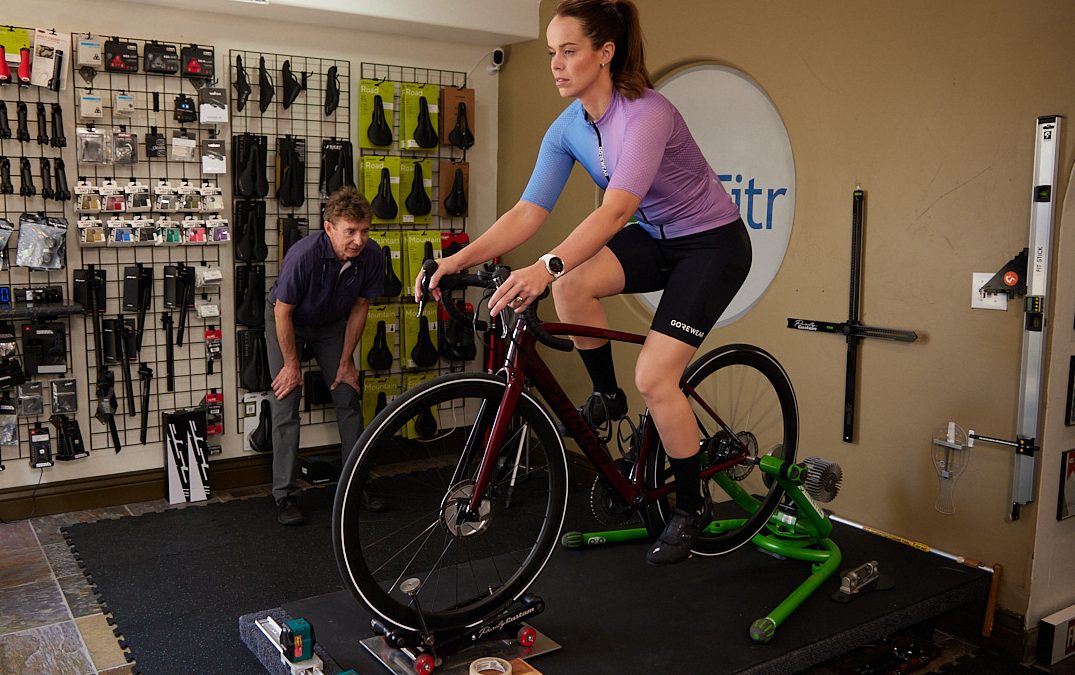
Lori pointed out that John’s fitting studio has more than 250 Google reviews, every one of them five stars. His explanation had nothing to do with equipment. He thinks of bike fitting as «being a therapist for a cyclist and their bicycle,» and every session starts with an unhurried conversation before the rider gets anywhere near the bike. Some riders arrive ready to change into kit and get going. They sit and talk first. The outcome matters (less pain, better handling, more power), but John’s view is that «what people remember is the experience of the fit.» The same idea carries over to Fit Kit Systems, where a question gets answered by a real person rather than a chatbot, even if that sometimes means waiting until John is between fits.
Measure the Body, Not Just the Movement
A lot of modern fitting has dropped static body measurements in favor of motion capture. John disagrees, and this was the most technical stretch of the episode. The original Fit Kit body measurement system takes four measurements: foot length, inseam, torso, and arm length. Historically those numbers spat out a frame size and a seat height. John uses them differently now, to understand proportions: is the rider torso dominant or leg dominant, and how does arm length relate to torso length? Bikes are built for the middle of the bell curve, and fitters spend their days with the people who are not. Joint angles are controlled by muscles attached to bones of a particular length, so starting with the angle leaves useful information on the table. It takes about five minutes of a fit. Riders who have been fitted elsewhere regularly tell him no one has ever measured them like that.
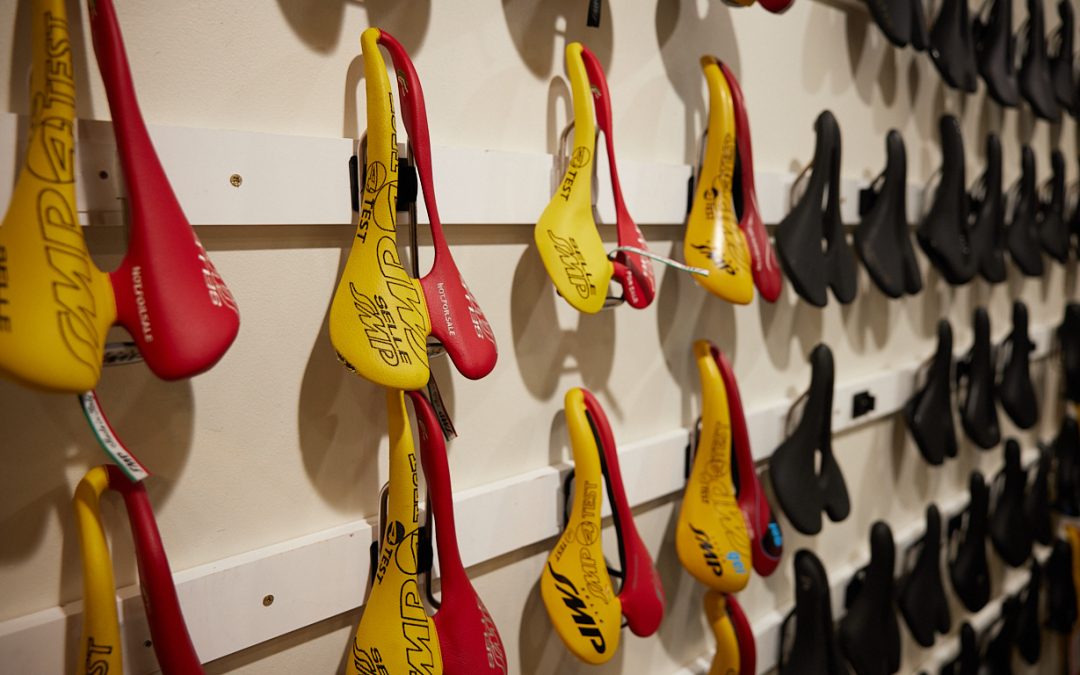
Sit bone width got the same treatment. Some shops pick a saddle from that number alone, and some fitters ignore it completely. John does neither: he measures it to rule out saddles that are clearly too narrow or too wide, then lets shape decide the rest. «It is not the answer,» he said. «It is a perspective.» If that approach interests you, his article on why saddle shopping is not saddle fitting walks through how he narrows a selection in the studio and what a rider can test at home.
The One Tool in John’s Home Workshop
Asked for a single piece of advice for listeners who are nowhere near Salt Lake City, John didn’t hesitate: «beware the silently slipping seat post.» Seat posts slip, even when tightened to the manufacturer’s torque spec. Mechanics drop a saddle to fit a bike in the work stand and forget to raise it again. And as Lori pointed out, a bike taken apart for travel does not always go back together the same way. John has had riders leave a fit happy, come back a few rides later with something not quite right, and find the post had crept down. He has done it to himself too, and the knee pain took weeks to settle.
The fix is knowing your number and having a repeatable way to check it. The Saddle Height Kit measures from the center of the bottom bracket to the point where the saddle is 80mm wide, so you are measuring between the same two points every time instead of eyeballing both ends of a tape. Of every tool John has access to, it is the only one he keeps at home. For more on what that number means and why formulas only get you partway there, see Saddle Height: Why Formulas Only Get You Partway There.
The Bottom Line
In short: fundamentals first, gadgets second. Measure the rider, listen to the rider, and check that the saddle is still where you left it. The full conversation also covers the old rotational adjustment device (and why it disappeared), extendable goniometers, sit bone measurement on the Velometrik SmartCube, and a brief detour into why there is no koala on anything Fit Kit sells. You can hear the full episode on Spotify or at The Cycling Independent.






0 comentarios